Visit Porto Moniz
A quick overview of the topics covered in this article.
The Ultimate Guide to Visit Porto Moniz: Why Madeira’s Wild North Should Be Your Basecamp
If you are planning a trip to Madeira Island, you are likely facing the classic traveler’s dilemma: where should you stay? While the southern capital of Funchal offers sprawling resorts and city life, there is another side to Madeira. A side where ancient forests meet vertical sea cliffs, where the ocean crashes into black volcanic rock, and where the true, untamed soul of the island still thrives.
Welcome to Porto Moniz.
Located on the extreme northwestern tip of the island, Porto Moniz is not just a day-trip destination; it is the ultimate basecamp for travelers who crave authentic experiences, deep relaxation, and profound connection with nature. Forget the crowded tourist traps and the exhausting daily commutes across the island.
In this massive, comprehensive guide, we are going to dive deep into everything you need to know about visiting Porto Moniz. From its fascinating history and unique geography to a highly detailed, insider’s guide to its greatest attractions, this is your complete blueprint for the perfect Madeiran adventure.
Chapter 1: The Philosophy of the North (Why “Slow Travel” is the Ultimate Luxury)
Imagine waking up on your first morning in Madeira. What do you hear?
If you followed the traditional travel advice and booked a hotel in the southern capital of Funchal, you likely hear the hum of city traffic, the clatter of massive breakfast buffets, and the idling engines of dozens of 50-passenger tour buses preparing for their daily island circuits. You look at your watch, realize you need to beat the traffic to the highway, grab your keys, and mentally prepare for a stressful, two-hour round-trip commute just to see the island’s famous nature.
Now, picture a different morning.
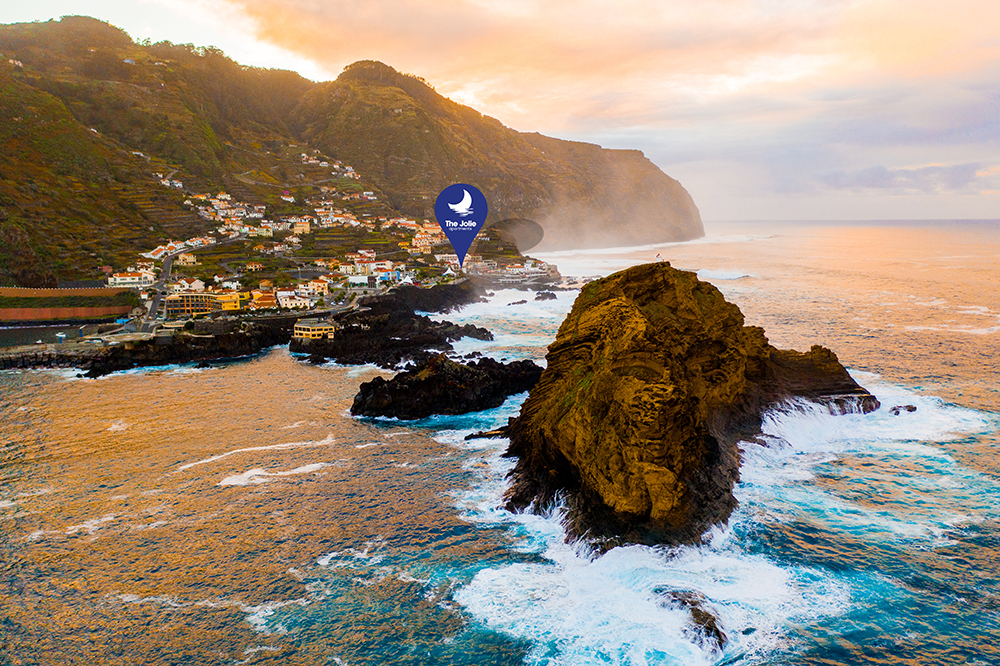
You wake up to the rhythmic, thunderous crash of the Atlantic Ocean meeting ancient volcanic rock. You step out onto your private balcony with a hot cup of coffee, breathing in the crisp, salt-tinged air. There are no tour buses. There is no traffic. You are in the quiet, historic coastal village of Porto Moniz, and the island’s most staggering natural wonders are sitting quietly right outside your front door.
This is the profound difference between a vacation and a genuine, soul-resetting escape. This is the philosophy of the North Coast.

The Day-Tripper’s Dilemma
For decades, the standard blueprint for visiting Madeira Island has been deeply flawed. Travelers base themselves in the heavily developed southern resort zones and spend their precious vacation sunbathing by the hotel pool. More recently, and with younger, nature eager tourists coming to Madeira, staying in Funchal, means that they white-knuckle their rental cars through mountain tunnels and narrow, winding roads to catch brief, crowded glimpses of the northern wilderness, always with one eye on the clock to ensure they make it back south before the sun sets.
We call this “The Commuter’s Vacation.” When you travel like this, Madeira becomes a frantic checklist. You see the island, but you do not feel it.
Embracing the “Slow Travel” Ethos
At The Jolie, we champion a radically different approach: Slow Travel.
Slow travel is the ultimate modern luxury. It is the conscious decision to stop rushing. It is the permission you give yourself to deeply immerse in a single, spectacular location rather than superficially scanning an entire map.
When you make Porto Moniz your basecamp, the frantic ticking of the clock completely stops. The untamed northwestern corner of the island ceases to be a rushed day-trip destination and instead becomes your personal, tranquil backyard.
-
You Own the Mornings: You can walk down to the world-famous porto moniz natural pools at 8:30 AM and swim in the crystal-clear volcanic basins in total silence, hours before the first southern tour bus even crosses the mountain range.
-
You Own the Sunsets: You can linger on the sheer cliffs at the ponta da ladeira to watch the sun melt directly into the Atlantic, knowing that your warm, comfortable local home is just a breezy 10-minute coastal drive away.
-
You Dictate the Pace: If you find a quiet, cliffside seafood tavern you love, you can sit there for three hours drinking local wine, entirely unbothered by a looming more than an hour highway drive back to Funchal.
Porto Moniz is not just a place to visit; it is a sanctuary where you can disconnect from the noise of the modern world and reconnect with the raw, ancient rhythm of nature. By choosing the wild north, you trade the exhaustion of commuting for the deep, restorative peace of true island immersion.
Chapter 2: The Geography & The Magic Microclimate
To truly understand why Porto Moniz is the most spectacular region on the island, you have to look at how it was forged. You are not just visiting a coastal village; you are entering a geographical masterpiece of extremes.

The Lay of the Land: A World of Vertical Extremes
The municipality of Porto Moniz covers a vast 82.93 square kilometers of the island’s extreme northwestern corner. Despite this massive footprint, it is wonderfully serene, home to a permanent population of only about 2,500 resilient locals.
The topography here defies logic. Within just a few kilometers, the landscape rockets from the deep blue depths of the Atlantic Ocean at sea level directly up to the sprawling, otherworldly Paul da Serra plateau, reaching dizzying altitudes of over 1,500 meters (4,900 feet).
Because of these violent geological shifts, Porto Moniz is home to an incredible diversity of ecosystems. On the coast, you have jagged black basalt, violent sea stacks, and the powdery volcanic sands of seixal beach. But drive just 25 minutes straight up the cliff face, and you enter the UNESCO World Heritage Laurissilva—a dense, dark, and ancient laurel forest that has survived since the tertiary period.
Debunking the Myth of the “Rainy North”
If you are planning your trip to Madeira, you have likely encountered the most pervasive, misunderstood myth about the island: “The south is sunny, and the north is always raining.”
Many travelers check standard global weather apps, see a rain cloud icon over “Northern Madeira,” and panic. They assume their vacation will be ruined by storms. This is completely false. What standard weather apps cannot comprehend is Madeira’s famous, highly localized microclimate.
Here is the fascinating meteorological science of the North Coast, simplified: Madeira sits directly in the path of the Northeast Trade Winds. As these moisture-heavy ocean winds sweep across the Atlantic and hit the island, they collide head-on with Porto Moniz’s towering mountain range.
-
The Cloud Trap: The massive mountains act like a towering, green wall. They physically trap the incoming clouds at high altitudes (usually between 800 and 1,200 meters). As the clouds are forced upward, they cool and drop their rain over the central peaks and the high plateaus. This is why the high-altitude fanal forest is so spectacularly lush, misty, and green.
-
The Coastal Clear-Up: But here is the magic—by the time the weather system finishes dumping its rain on the peaks, the system breaks apart. Down at sea level, the coastal village of Porto Moniz is frequently left sitting directly under bright, warm, open sunshine!
The Strategic Advantage of the North and to Visit Porto Moniz
When you understand this microclimate, you realize that the weather is not a hindrance; it is a powerful tool. You can literally experience four different seasons in a single day, simply by changing your altitude.
This is where the Funchal tourist fails, and the Porto Moniz local succeeds.
If you are staying in the south, the central mountains block your view of the north. You look at a weather app, see rain in the northern peaks, and assume the entire northern coast is miserable. You end up missing a gorgeous 25°C (77°F) beach day at Seixal because of a computer algorithm.
But when you wake up in Porto Moniz, you are already at sea level. You step onto your balcony and look with your own eyes.
-
Is it brilliantly sunny on the water? Grab your towel and spend the morning floating in the lava pools.
-
Are the clouds rolling thick and dark over the mountain peaks? Perfect! Get in your car and drive 20 minutes straight up into the storm. You will emerge into the high-altitude fog of the Fanal, experiencing the ancient, twisted trees in their most cinematic, mysterious, and magical state.
- As alternative to the weather app on your phone, you can check the weather on the north coast, in these live webcams.
When you base yourself in the north, you stop fighting the weather and start playing it to your absolute advantage. You are never more than a short, scenic drive away from the exact microclimate you want to experience.
Chapter 3: A Journey Through Time (The History & Culture of the North)
To truly appreciate the deep, quiet soul of Porto Moniz, you must first understand its incredible history of isolation. For centuries, this village was effectively an island on an island. It was a place forged by the sheer willpower of its people, locked in a constant, beautiful, and sometimes brutal dance with the Atlantic Ocean and the vertical cliffs that surrounded them.
An Island on an Island
Before the modern marvel of the VE2 and VR1 highway tunnels, the rugged northwestern made a trip to Porto Moniz much more challenging than today. From São Vicente, you can still see several trenches of the old carved road. There were no breezy, 50-minute drives to the southern capital.
If a local resident in the 18th or 19th century needed to reach Funchal, they faced two daunting options. They could brave the violent, unpredictable northern ocean swells by boat, or they could undertake a grueling, multi-day trek on foot, climbing thousands of meters over the jagged central mountain peaks and through the dense, freezing fog of the ancient forests. Because of this extreme geographical isolation, the culture of Porto Moniz developed a fierce independence and a profound connection to the raw elements.
The Aristocrat and The Safe Harbor
The story of the village’s founding dates back to the late 15th century. It is named after Francisco Moniz O Velho, an aristocrat from the Algarve region of mainland Portugal, who married the grand daughter of one of the island discoverer João Gonçalves Zarco.
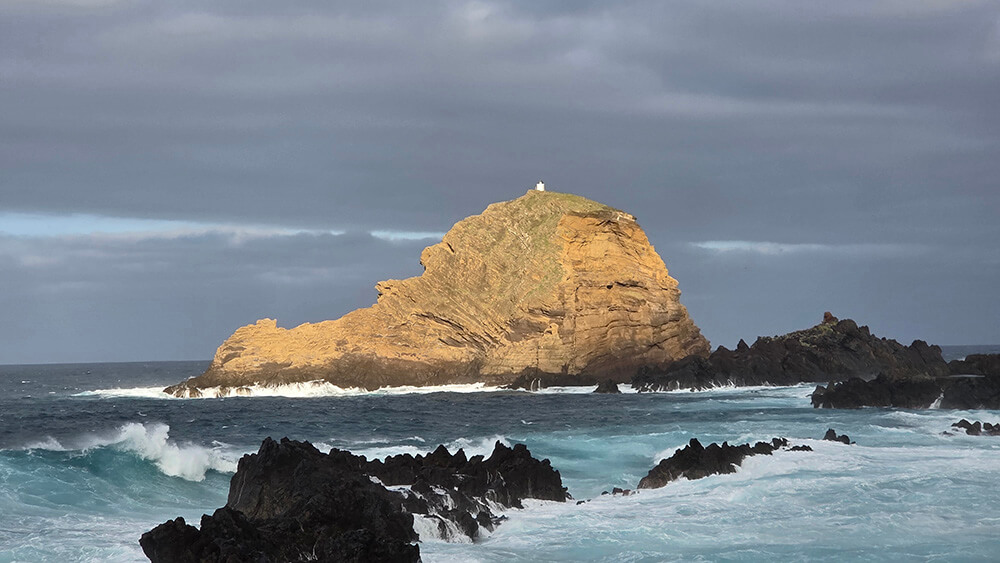
When early explorers navigated the treacherous North Coast, they found very few places to safely anchor a ship. The towering cliffs dropped straight into churning, violent waters. However, nature had provided one perfect anomaly here: the Ilhéu Mole. This massive, dome-shaped volcanic islet sitting just offshore acted as a natural breakwater, creating a rare, calm harbor. Francisco Moniz recognized the strategic brilliance of this location, claimed the land, and the “Port of Moniz” was born.
Whalers, Pirates, and Cliffside Farmers
Because the land routes were nearly impassable, the locals turned to the sea for survival. Porto Moniz developed a rich, generations-deep fishing culture.
-
The Whaling Era: Well into the 20th century, the village was a hub for the Madeiran whaling industry. If you look closely over the edge of the mountains, you can see the two “Vigias”. These were observation decks, where spotters would scan the deep blue horizon for the spouts of passing sperm whales.
-
The Pirate Threat: The isolation of the village also made it a prime target. In the 1700s, French corsairs and pirates frequently raided the North Coast. In response, the locals constructed the Forte de São João Batista in 1730—a sturdy basalt stone fortress right on the water’s edge to defend their home with cannons. (Today, this beautifully restored replica houses the Madeira Aquarium!)
-
The Vertical Vineyards: What the locals couldn’t pull from the sea, they pulled from the stone. The farmers of the Porto Moniz municipality—particularly in the neighboring parish of Ribeira da Janela—performed agricultural miracles. They carved tiny, terraced plots of flat land (fajãs) directly into the near-vertical cliff faces. To this day, the grapes grown on these sun-drenched, terrifyingly steep northern cliffs are harvested entirely by hand to produce some of the finest, most complex Madeira fortified wines.
The Modern Era: Breaking the Isolation and making easy to Visit Porto Moniz
It wasn’t until 2004, with the blasting of the modern highway tunnels, that Porto Moniz was finally connected seamlessly, and by modern roads, to the rest of the island.
Yet, the miracle of Porto Moniz is that the arrival of modern roads did not destroy its soul. It did not transform into a sprawling, concrete resort town. It proudly retained its identity as a quiet, authentic fishing village. When you walk the promenade today, you are walking on the exact same volcanic stone where centuries of fishermen, whalers, and resilient farmers built a life at the edge of the world.
Chapter 4: The Volcanic Water Masterclass
If there is one single image that defines the North Coast of Madeira in the minds of travelers around the globe, it is the aerial shot of crystal-clear, turquoise water held perfectly still inside jagged rings of black basalt rock, while the furious white foam of the Atlantic Ocean crashes just inches away.
These are the legendary porto moniz natural pools (Piscinas Naturais).
They are the crown jewels of the municipality, and swimming in them is a deeply visceral, unforgettable experience. However, because they are so famous, they are also the primary target for every day-tripper on the island. To experience them properly—with peace, space, and a touch of magic—you need local knowledge.
The Geology: How the Pools Were Forged
The natural pools were not carved by human hands; they are a masterpiece of ancient volcanic violence. Thousands of years ago, massive rivers of superheated lava flowed down from the Paul da Serra plateau and met the freezing, turbulent waters of the Atlantic Ocean.
As the lava hit the sea, it rapidly cooled and hardened, forming complex tubes, collapsed craters, and jagged rock rings along the shoreline. Today, the high tide of the Atlantic naturally rushes over these volcanic walls, flushing out the basins and leaving behind perfectly clean, calm, and bracingly refreshing saltwater pools.
The Big Secret: There Are Actually TWO Sets of Pools
Most guidebooks fail to mention this crucial detail: Porto Moniz actually features two entirely distinct sets of natural pools, offering two completely different experiences. Three, if you count with the one in Seixal.
1. The Western Pools (The Paid, Manicured Experience)
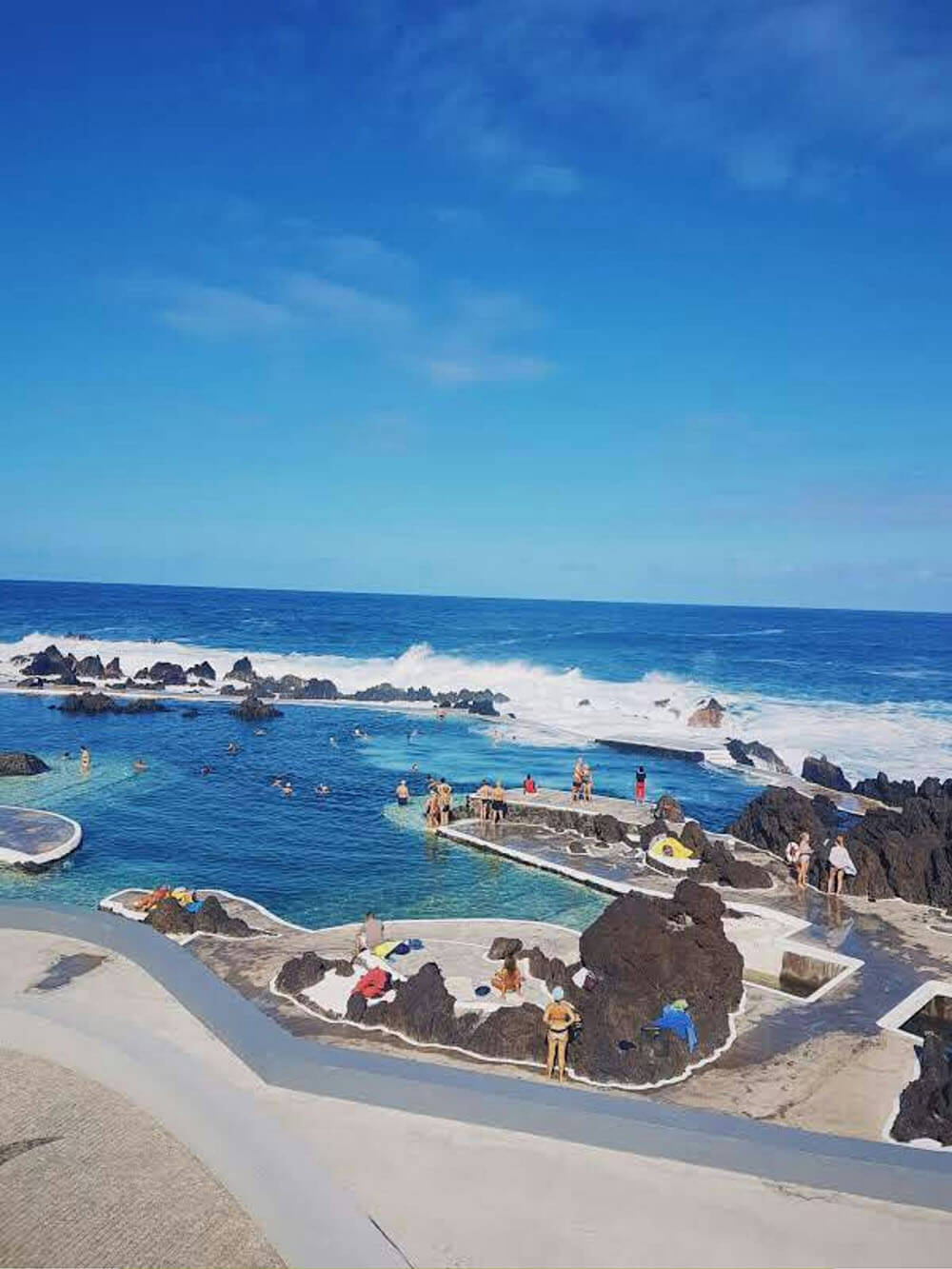
Located on the western end of the promenade, these are the pools you usually see on postcards.
-
The Vibe: They have been heavily modified for ultimate comfort and safety. The jagged rocks have been smoothed over with smooth white concrete pathways. There are shallow wading areas for toddlers, pristine changing rooms, lockers, sunbeds, and active lifeguards on duty.
-
The Cost: There is a nominal entry fee (typically around €3.00).
-
Who it is for: Families with young children, travelers who want the comfort of a lounge chair, and those looking for a highly controlled swimming environment.
2. The Eastern Pools / Piscinas do Cachalote (The Raw, Free Experience)
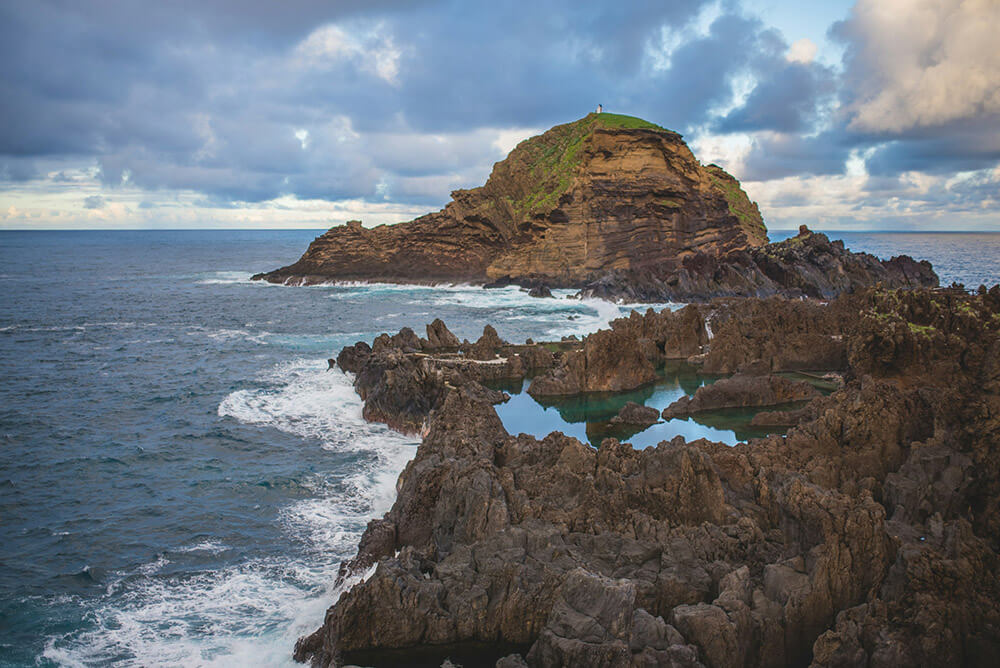
Located right next to the Forte de São João Batista and the Cachalote restaurant, these pools are the most natural experience.
-
The Vibe: These pools have been left completely raw and natural. There is no poured concrete, no lifeguards, and no sunbeds. You must carefully navigate the smooth, natural black basalt rocks to enter the water. It feels wild, untamed, and completely authentic.
-
The Cost: 100% Free.
-
Who it is for: Nature purists, strong swimmers, and travelers seeking an authentic, rugged island experience.
3. The poça das lemas (In seixal parish – 10 minutes away from Porto Moniz center)
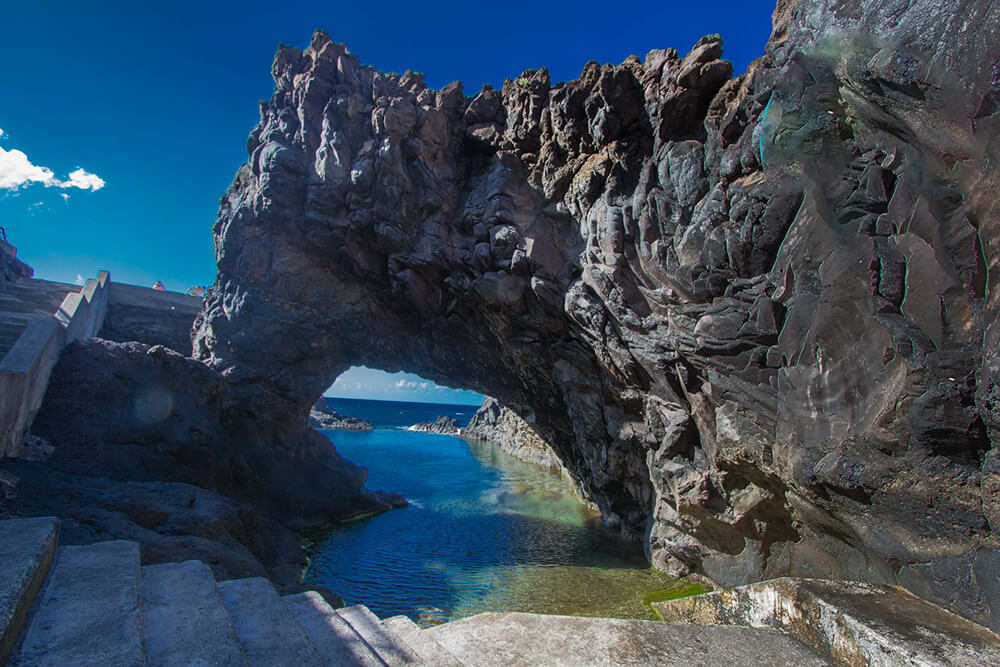
-
The Vibe: These pools are hidden from the majority of travelers, as they aren´t visible form the main road. The pools have been left completely raw and natural. There is just small poured concrete for some paths and sunbathing space, a small cafe during summer time. There´s no lifeguards, and no sunbeds. It feels wild, untamed, and authentic.
-
The Cost: 100% Free.
-
Who it is for: Nature purists, strong swimmers, and travelers seeking an authentic, rugged island experience.
The Logistics: Navigating the Water Like a Local
If you try to visit the pools at 1:00 PM in the middle of August, you will find yourself shoulder-to-shoulder with hundreds of tourists who just spilled out of massive buses, or are just here for the day. Here is how you do it right.
-
Parking: If you are driving into the village, Porto Moniz is incredibly accommodating. There is several massive, open-air parking lots right next to the main promenade and to the natural lava pools. Everithing is reached whitin a couple of minutes walking. Parking usually costs around €5 for the entire day.
-
What to Bring: Always pack water shoes or aquatic sandals (do i need it? – Read here) . While the paid pools have concrete bottoms in some areas, the free pools are pure volcanic rock, which can be sharp and slippery. Bring a pair of snorkeling goggles—the pools naturally trap small, colorful coastal fish, crabs, and sea snails!
-
Respect the Atlantic (Tide Warnings): The pools are at the mercy of the ocean. During the winter months, or during exceptionally high tides, the colossal northern swells will crash entirely over the volcanic walls, turning the calm pools into a dangerous washing machine. When the red flags are flying and the gates are locked, do not attempt to swim. Instead, grab a coffee on the promenade and enjoy the spectacular, terrifying show of nature’s power from a safe distance. THIS IS VERY IMPORTANT. SAFETY FIRST!
🤫 The Jolie Local Secret: The Private Sunrise Swim
Because you have chosen to base yourself at The Jolie in Porto Moniz, you hold the ultimate trump card over the Funchal crowds: Time.
Do not go to the pools in the afternoon. Wake up just before dawn. Throw your towel over your shoulder and take the 3-minute walk down the quiet promenade to the free Piscinas do Cachalote.
At 7:30 AM, the tour buses are still an hour away from even starting their engines. You will have the entire volcanic basin to yourself. Slipping into the cool, silent, crystal-clear water just as the morning sun crests over the eastern cliffs, painting the sky in shades of violent pink and gold, is a profoundly grounding experience. It is the ultimate natural reset button for your body and mind.
You finish your private swim, dry off on the ancient lava rocks, and stroll back to your apartment for a hot shower and breakfast, just as the first stressed-out day-trippers begin desperately hunting for parking.
This is the luxury of slow travel. This is why you stay in the North.
Chapter 5: Chasing Black Sands & Sea Stacks (The Dramatic Coastline)
When you leave the village of Porto Moniz and travel just a few minutes east along the northern coastline, the geography shifts from jagged lava pools into something that looks like it belongs on another planet. This stretch of the coast, connected by the stunning VE2 highway, is an absolute masterpiece of geological violence and lush, tropical beauty.
If you are hunting for the most cinematic landscapes on Madeira Island, you do not need to embark on a grueling, cross-island expedition. Because you have embraced the slow travel philosophy, these world-renowned wonders are practically in your front yard.
The Giants of the Ocean: Ilhéus da Ribeira da Janela
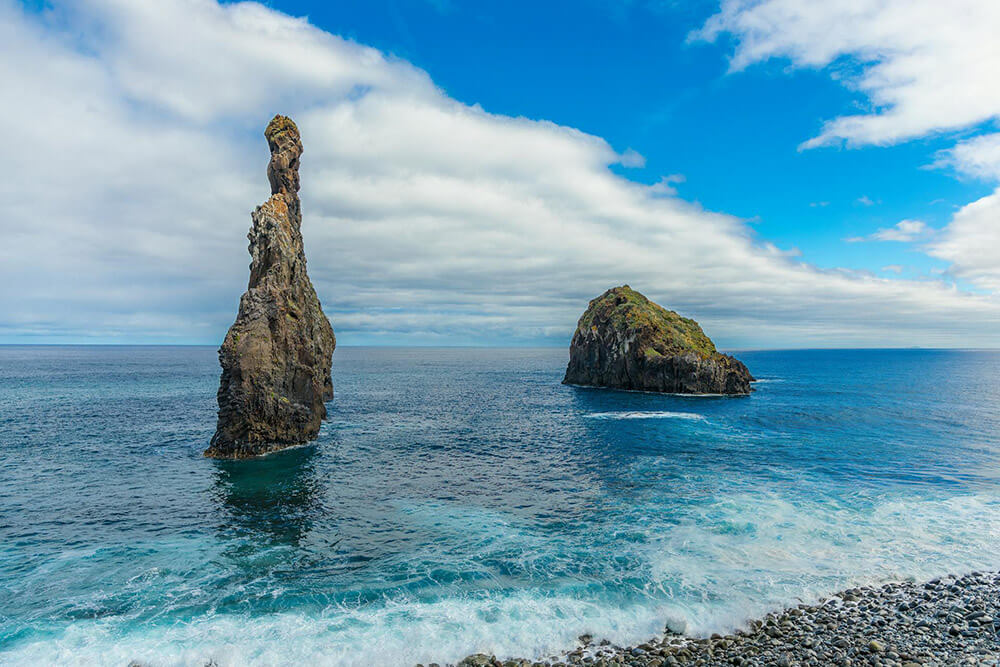
Just a breezy, five-minute drive from your local home at The Jolie, you will cross into the neighboring parish of Ribeira da Janela. Pull off the main road, and you will be confronted by a scene of staggering scale.
Rising violently out of the crashing Atlantic Ocean, just meters from the shoreline, are massive, jagged volcanic sea stacks. These towering rock formations have been battered by the northern swells for millennia.
-
The Window in the Rock: The parish itself is named after the largest of these sea stacks. If you look closely at the peak of the tallest rock, you will see a perfect, naturally eroded hole—a janela (window)—carved entirely by nature.
-
The Sound of the Shore: The beach here is not made of sand. It is composed of massive, smooth, grey river stones known locally as calhaus. When a large wave crashes onto the shore and then violently recedes, the millions of stones roll over one another, creating a deep, thunderous, clattering sound that vibrates right through your chest.
The Logistics & The Local Secret For the Funchal day-tripper, this is just a quick, five-minute photo stop in the middle of a rushed afternoon. But for you, it is a morning sanctuary.
-
Parking: There is a completely free parking lot right next to the beach, complete with public restrooms.
-
The Secret Viewpoint: Do not just stand in the parking lot! Look for the subtle, man-made tunnel carved directly through the solid rock cliff on the right side of the beach. Walk through this dark, cool tunnel, and you will emerge onto a hidden stone staircase that leads to a spectacular, elevated viewing platform perfectly framing the sea stacks.
-
The Ultimate Timing: Drive here 20 minutes before sunrise. You will be the only person on the beach. Watching the first golden light of day illuminate the dark basalt rocks while the ocean roars is an incredibly spiritual, grounding experience.
The Velvet Sands: Seixal Beach (Praia do Porto do Seixal)

Continue another 10 minutes east along the coastal road, head to the Seixal harbour, and the landscape softens dramatically. You have arrived at seixal beach, repeatedly voted one of the most beautiful, untouched beaches in all of Europe.
Unlike the imported golden sands of the southern resort towns, Seixal is entirely natural. It is a sweeping crescent of pure, powdery, jet-black volcanic sand.
-
The Jurassic Backdrop: What makes Seixal visually staggering is the contrast. You have the dark, sparkling sand beneath your feet, the bright turquoise and deep navy gradient of the Atlantic Ocean in front of you, and towering, near-vertical mountains covered in lush, deep green vegetation rising immediately behind you.
-
The Waterfall: If you look toward the far eastern edge of the cliffs while standing on the sand, you will see a pristine, white waterfall pouring directly out of the jungle canopy and crashing onto the shoreline. It feels like stepping onto the set of Jurassic Park.
The Logistics & The Local Secret Because of its extreme beauty, Seixal has exploded in popularity, making logistics crucial.
-
Parking: There is a very steep, paved road leading down to the sand with parallel parking spots along the sea wall. By 10:30 AM in the summer, these spots are gone. Day-trippers are forced to park high up in the village and hike down the exhausting hill. But because you are staying just 15 minutes away in Porto Moniz, you can effortlessly arrive at 9:00 AM, claim the best parking spot right next to the sand, and enjoy the beach in peace.
-
What to Bring: Always bring a dark-colored towel! The fine black volcanic dust will permanently stain pristine white hotel towels.
Chapter 6: The Ancient Forests & High Plateaus
Madeira is a vertical island. The true magic of the North Coast is that you do not just have access to the ocean; you have immediate, direct access to the sky.
When you are ready to trade the salty coastal breeze for the crisp, thin air of the mountains, you simply turn your car inland and drive up. Within 25 minutes of leaving the sea-level village of Porto Moniz, you will ascend onto the Paul da Serra—a massive, sprawling, high-altitude plateau that feels like an entirely different continent.
The Realm of the Mist: The Fanal Forest
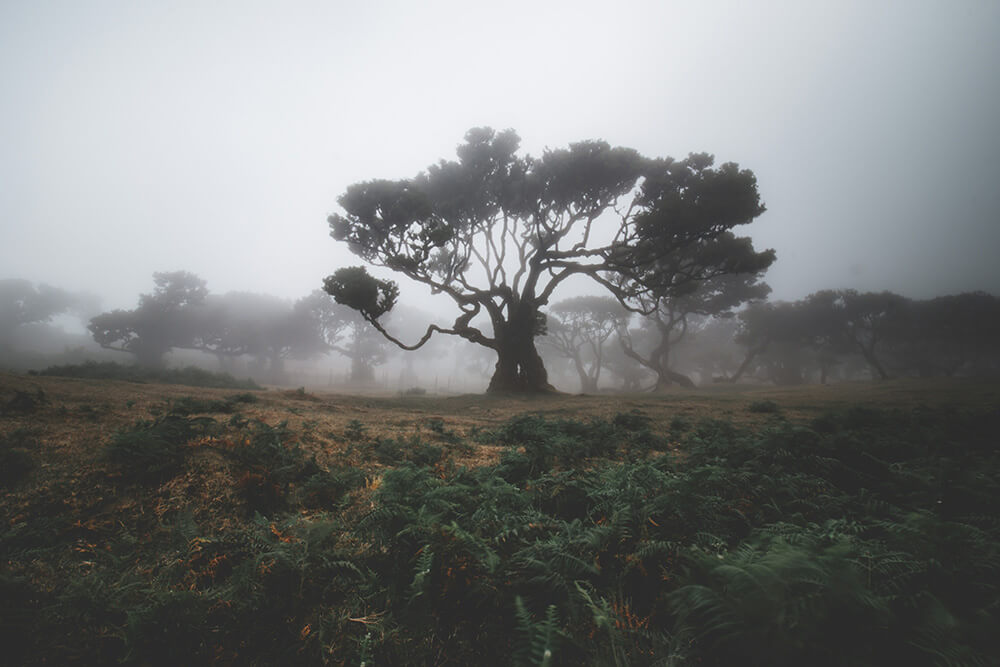
Located on the northwestern edge of this plateau, hovering around 1,150 meters (3,700 feet) above sea level, is the undisputed crown jewel of Madeira’s high country: the fanal forestry station.
The Fanal is a protected section of the UNESCO World Heritage Laurissilva (Laurel) forest. This ancient ecosystem once covered much of Southern Europe millions of years ago, but it survived the last Ice Age almost exclusively here in the Madeira archipelago.
-
The Ancient Giants: The plateau is dotted with colossal, centuries-old Til trees (Ocotea foetens). Their massive trunks are twisted, gnarled, and completely covered in thick layers of green moss and trailing lichen. Some of these living monuments have been standing for over 500 years.
-
The Magic of the Microclimate: Remember the cloud trap we discussed in Chapter 2? The Fanal is exactly where those clouds get stuck. This plateau is frequently swallowed by a dense, rolling, bright white fog. When the mist rolls in, the ambient sound completely drops away. The air becomes eerily silent, and the twisted silhouettes of the trees fading into the white fog create an atmosphere of pure, cinematic magic.
-
The Local Residents: As you wander through the thick mist, do not be surprised if a massive shape suddenly materializes in front of you. The plateau is home to herds of free-roaming, gentle dairy cows that graze peacefully among the ancient roots.
The Art of the Contrast (Why Your Basecamp Matters)
The Fanal plateau provides the ultimate proof of why staying in Porto Moniz is a strategic masterpiece.
Imagine you are staying in Funchal. You pack your car for a sunny beach day, drive an hour and a half across the island, and arrive at the coast only to find it slightly overcast. Your entire day is derailed.
Now, imagine you are waking up at The Jolie. You look out your window. The bright, warm sun is shining over the porto moniz natural pools. You spend your morning floating in the warm saltwater. After lunch, you look up at the mountains behind the village and notice the thick, dark clouds gathering at the peaks.
Instead of being disappointed, you smile. You know exactly what that means. You grab your keys, drive 25 minutes up the steep, winding ER209 mountain road, and plunge your car directly into the cloud cover. You trade your swimsuit for a warm sweater and spend your afternoon wandering through the moody, freezing, mystical fog of the Fanal.
This extreme contrast—from warm coastal sunshine to freezing, ancient mountain mist in under half an hour—is the true luxury of the North. You don’t get that in a southern resort.
The Logistics & The Local Secret
Navigating the high altitudes requires a bit of practical preparation.
-
Parking: There is a completely free, dedicated parking area at the Posto Florestal (forestry station). Because the plateau is vast, even if the lot is full, cars safely parallel park along the wide, grassy shoulders of the straight road.
-
What to Bring: You must respect the altitude. Even if it is 25°C (77°F) on the coast, the Fanal can easily drop to 12°C (53°F) with a biting wind and heavy, soaking mist. Pack a waterproof windbreaker, a thick mid-layer, and sturdy, waterproof hiking boots. The grass here is notoriously muddy, slippery, and dotted with cow manure. Do not wear white city sneakers!
-
The Secret Lagoon: Most tourists visit the Fanal in the bone-dry summer, completely missing its rarest phenomenon. If you visit during the winter, or immediately following a few days of heavy, torrential rain, the large, natural depression in the center of the plateau fills with water, creating the Lagoa do Fanal (Fanal Lagoon). When the mist clears for just a moment, the reflection of the 500-year-old twisted trees perfectly mirrored in the temporary lake is, without exaggeration, the most spectacular photograph you can capture on the entire island.
If you continue driving across the Paul da Serra plateau, heading west, the landscape flattens out into an expanse of golden gorse and heather. Eventually, this high road leads to the absolute edge of the earth, setting you up perfectly for an adrenaline-pumping descent on the achadas da cruz cable car. But to conquer the western cliffs, you need to be prepared for vertigo.
Chapter 7: The Edge of the Earth (The Western Cliffs)
When you drive west from the center of Porto Moniz, the lush, green slopes of the northern valleys suddenly give way to something far more dramatic. The land simply runs out. You have reached the extreme northwestern edge of Madeira—a place where the island feels like a towering fortress wall dropping vertically into the abyss of the Atlantic Ocean.
This is a landscape of raw adrenaline and absolute isolation. For travelers seeking the true, untamed soul of the island, the western cliffs are not just a viewpoint; they are an absolute necessity.
The Vertical Plunge: Achadas da Cruz Cable Car
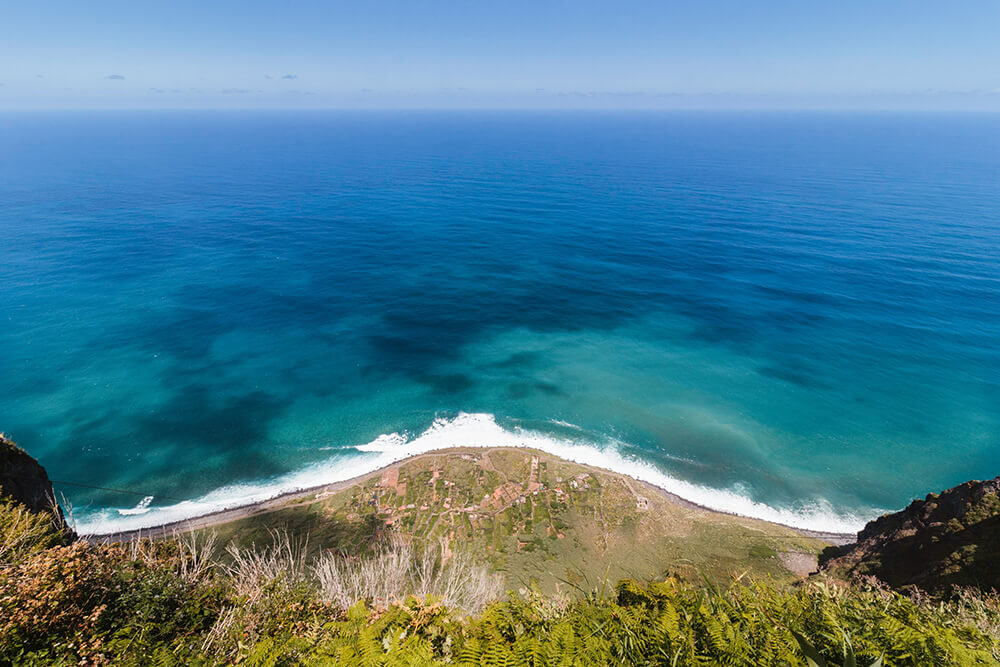
Located just a short drive from your basecamp is one of the most thrilling experiences in all of Europe. The achadas da cruz cable car (Teleférico das Achadas da Cruz) is not a leisurely, glass-bottomed tourist gondola. It is a staggering, near-vertical descent down a 450-meter (1,475-foot) sheer cliff face. Is it safe? Find out here.
-
The Agricultural History: This cable car was not originally built for thrill-seekers. It was constructed to solve a massive logistical problem for local Madeiran farmers. At the bottom of this terrifying cliff lies the Fajã da Quebrada Nova—a tiny, fertile sliver of land completely cut off from the world. Before the cable car, farmers had to hike a treacherous, zigzagging dirt path up the cliff carrying hundreds of pounds of grapes and crops on their backs. The vereda da Quebrada Nova
-
The Descent: Stepping into the small metal car and feeling it lurch over the edge of the cliff is heart-stopping. As you drop, the sound of the wind is gradually replaced by the roaring, echoing crash of the ocean below.
-
A World Without Cars: When the doors open at the bottom, you step into pure silence. There are no cafes, no paved roads, and no cars. There are only abandoned, historic stone farm huts, a rugged pebble pathway, and the violent beauty of the Atlantic swells smashing into the shore.
The Logistics & The Local Secret Because this remote cable car has exploded in popularity, logistics are everything.
-
Parking: There is a free, paved parking lot right at the upper station, and plenty of safe overflow parking along the dirt shoulders of the long access road (Caminho do Teleférico). Read here the detailed parking article.
-
The Funchal Disadvantage: Day-trippers from the south face a grueling 90-minute drive just to reach this spot. By the time they arrive at 1:00 PM, the line to ride down can take nearly an hour.
-
The Porto Moniz Advantage: From your home at The Jolie, this is a breezy, highly scenic 15-minute drive. You can arrive at 9:00 AM, park directly at the front, and be the first person down the cliff.
-
Wind Warnings: The operators are strictly bound by safety protocols. If the Atlantic trade winds are blowing too fiercely, the cable car will be closed. Check the weather or call ahead before making the drive.
🤫 The Local Secret: Most tourists ride down, walk for ten minutes, take a selfie, and ride right back up. Do not do this! Pack a fresh Bolo do Caco (garlic bread) and some local cheese from the village groceries. Walk all the way to the far southern edge of the fajã pathway, sit on the ancient stones, and have a completely isolated picnic. You will feel like you are the last person on earth.
The Sunset Capstone: Ponta da Ladeira

Because you are staying in the North, you do not have to rush back across the island before it gets dark. You have the ultimate luxury of staying for sunset.
Just a few minutes north of the cable car, in the “Santa” area, is the wild viewpoint of Ponta da Ladeira. This is arguably the best sunset location in Madeira. The jagged, overlapping green cliffs perfectly frame the sun as it melts directly into the Atlantic horizon. Bring a blanket, sit on the grass, and watch the sky explode in color, knowing your warm bed is only 10 minutes away.
Chapter 8: The Beginner’s Guide to Northern Levadas
Madeira is world-famous for its hiking network, boasting over 2,000 kilometers of trails. But if you look at a standard guidebook, the hikes can seem incredibly intimidating. Many of the famous routes are grueling, 15-kilometer, full-day treks that leave you completely exhausted.
But what if you are not an advanced mountaineer? What if you simply want a peaceful, two-hour morning stroll through an ancient forest before heading back to the coast for a seafood lunch?
Welcome to the beginner-friendly levadas of the North Coast.
What Exactly is a Levada?
Before you lace up your boots, you need to understand the brilliance of what you are walking on. A levada is a narrow, historic water channel. Centuries ago, the Madeiran people realized that the northern mountains trapped all the rainwater, while the southern agricultural fields were dry.
They painstakingly carved these channels into the sides of the mountains to transport the water across the island. The incredible benefit for modern hikers is this: because water must flow gradually, the maintenance pathways built right beside the levadas are almost always completely flat! This allows you to walk deep into impossibly steep, impassable mountains with almost zero incline.
1. Levada da Ribeira da Janela (The Intro Section)

You do not have to hike an entire trail to experience its magic. The full Ribeira da Janela levada is nearly 13 kilometers long, but the very first section is the perfect, easy morning walk.
-
The Experience: Starting just 10 minutes above the village of Porto Moniz, this trail takes you directly into one of the island’s most dramatic, lush river valleys. The path is carved into the cliffside, completely surrounded by towering ferns, moss, and the sound of rushing water.
-
The Tunnels: You will encounter several dark, hand-carved mountain tunnels along the way. Walking through them with a flashlight is a thrilling, Indiana Jones-style experience.
-
The Strategy: Simply walk for 45 minutes to an hour into the valley, enjoy the profound silence, and turn right back around.
2. The watermill Levada (PR7 – Levada do Moinho)
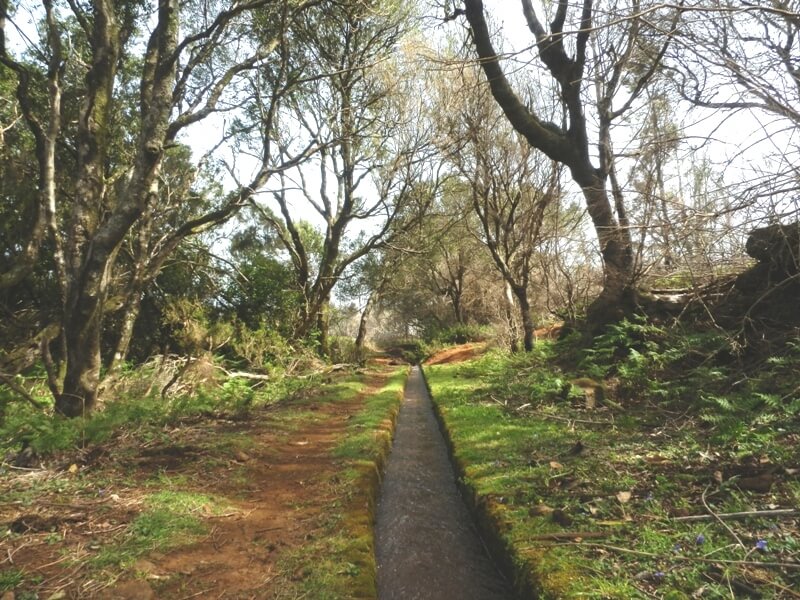
This 10,5 km trail, which takes about 3:30 hours, begins at regional road ER 101, which separates the municipalities of Porto Moniz and Calheta, near Ribeira da Cruz. Taking PR 7 Levada do Moinho will allow you to get directly in touch with the island’s natural and historical wealth.
-
The Experience: This is a local, completely flat, and incredibly easy walk.
-
Why it’s Perfect: There are no scary drop-offs, and no steep climbs,.
3. Levada dos Cedros (The Forest Immersion)
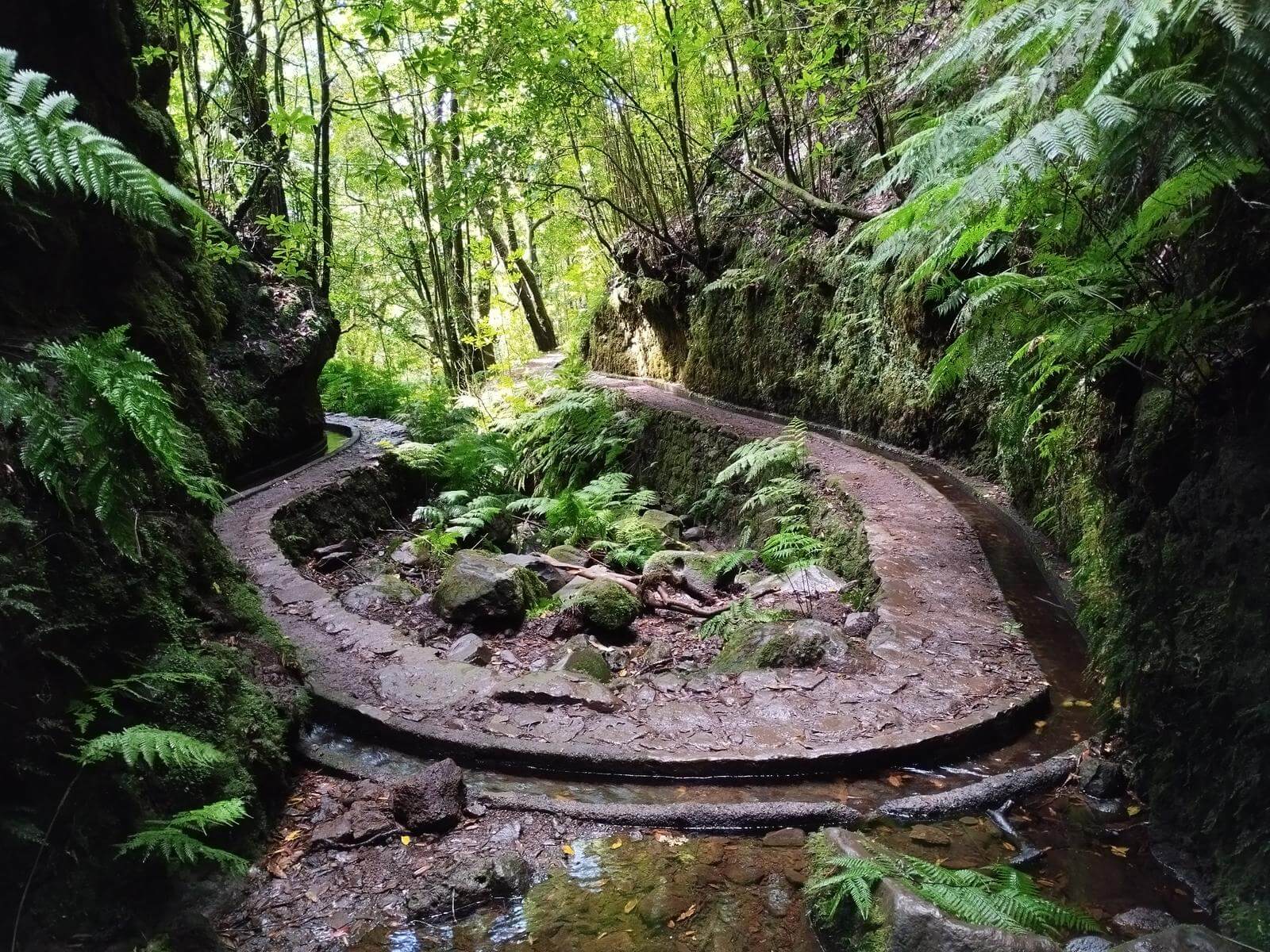
If you want to experience the deep, shaded canopy of the UNESCO Laurissilva forest without battling crowds, this trail is a masterpiece.
-
The Experience: The trailhead is located right on the ER209 mountain road, a 25-minute drive from Porto Moniz. It winds through a pristine section of towering, centuries-old Cedars of Madeira. It feels incredibly remote, ancient, and deeply peaceful.
The Logistics of a Flawless Morning Walk
Even if you are only hiking for an hour, the northern mountains require respect and preparation.
-
The Commute Advantage: The trailhead parking lots for these hikes—especially at the most popular ones —fill up by 9:30 AM. For a tourist in Funchal, beating that crowd requires waking up at 6:30 AM. Because you are based at The Jolie, you can wake up at 8:00 AM, enjoy a leisurely coffee, and still beat the tour buses to the mountain.
-
Footwear is Mandatory: Do not hike levadas in smooth-soled city sneakers. Because you are walking next to a water channel in a lush forest, the paths are frequently wet, muddy, and slippery year-round. Sturdy hiking boots or trail running shoes with aggressive grip are non-negotiable.
-
The Light: Always pack a flashlight or ensure your smartphone is fully charged. You never know when a levada path will suddenly dart into a dark, dripping mountain tunnel.
🤫 The Jolie Local Secret: The Ultimate Contrast Most visitors treat a levada walk as an exhausting, full-day physical challenge. As a slow traveler in Porto Moniz, you can turn it into a morning luxury.
Hike the lush, green Levada da Ribeira da Janela in the cool, quiet hours of the early morning. By 11:30 AM, you are back in your car. Drive 10 minutes down the mountain, strip off your muddy hiking boots, and plunge straight into the world-famous porto moniz natural pools. Washing the mountain sweat off your skin in the crystal-clear, icy waters of the Atlantic Ocean before sitting down to a feast of fresh grilled seafood is the absolute pinnacle of Madeiran travel.
Chapter 9: Advanced Trails & Northern Adrenaline
While the “Slow Travel” philosophy is deeply rooted in relaxation, it absolutely does not mean sitting still. For the highly active traveler, the untamed topography of the North Coast is the ultimate playground.
When you combine the towering vertical cliffs, the deep river valleys, and the sprawling high-altitude plateaus, you get a landscape practically engineered for intense, world-class adventure. By making Porto Moniz your basecamp, you are strategically positioning yourself at the starting line of Madeira’s most thrilling physical challenges.
The Masterclass in Timing: Levada das 25 Fontes (PR6)
If you have done any research on Madeira, you know about the Levada das 25 Fontes. It is the most famous hike on the island, culminating in a spectacular, weeping wall of lush green ferns where dozens of small waterfalls cascade into an icy, crystal-clear lagoon.
It is a demanding 9 to 11-kilometer round-trip trek through the Rabaçal valley, involving a massive descent into the gorge and hundreds of burning, uneven stone stairs. However, its beauty is a double-edged sword: it is completely overrun by tourists.
The Logistics & The Basecamp Advantage
-
The Funchal Nightmare: For a day-tripper staying in the south, hiking the 25 Fontes is a logistical headache. They must drive over an hour through the mountains. By the time they arrive at 10:30 AM, the massive Rabaçal parking lot is overflowing. They spend the next four hours trapped in a single-file line of tourists on a pathway that is often only a foot wide, constantly stopping to let large tour groups squeeze past.
-
The Porto Moniz Strategy: From your home at The Jolie, the trailhead is a deeply scenic, 35-minute drive up the ER209. You can effortlessly arrive at the parking lot by 8:00 AM.
-
The Reward: When you start early, the ancient forest is entirely silent. You can hike at your own rapid pace. When you finally reach the 25 Fontes lagoon, you will have the weeping waterfalls completely to yourself for photographs and quiet reflection. By the time the massive crowds arrive and the trail becomes frustrating, you are already walking back to your car.
Descending the Canyons: The Ultimate Northern Thrill
Hiking beside a mountain river is beautiful, but walking through it is an entirely different level of adrenaline. Canyoning is one of the fastest-growing adventure sports in Madeira, and the steep, water-rich northern valleys are the undisputed capital of it.
-
The Experience: Outfitted in a thick neoprene wetsuit, helmet, and climbing harness, you hike deep into a northern river gorge alongside professional local guides. When the river suddenly drops off a cliff, you do not turn around—you clip onto a rope and abseil (rappel) backward down the plunging waterfall!
-
The Northern Edge: Canyons like Ribeira Funda or the upper sections of Ribeira da Janela offer advanced, heart-pounding vertical drops and natural water slides carved directly into the smooth volcanic rock.
Mountain Biking the Paul da Serra
If you prefer your adrenaline on two wheels, the high-altitude plateau towering directly above Porto Moniz is a globally recognized mountain biking and enduro destination.
-
The Terrain: The Paul da Serra offers a brutal, exhilarating mix of technical rocky descents, muddy forest single-tracks, and high-speed dirt trails that weave through the golden gorse and ancient laurels. Local adventure companies offer high-end mountain bike and e-bike rentals, complete with shuttle drops, allowing you to conquer the northern ridges without having to pedal up the 1,500-meter vertical incline.
🤫 The Jolie Local Secret: The Ultimate Recovery When you push your body to the limit on an advanced hike or a freezing canyoning descent, your muscles will be screaming. If you are staying in the south, your “reward” is cramming your muddy, exhausted legs into a rental car for a 90-minute traffic-filled commute.
When you stay in Porto Moniz, your recovery is world-class. You drive straight down the mountain, strip off your muddy gear, and plunge directly into the porto moniz natural pools. The cool, mineral-rich saltwater of the Atlantic acts as a massive, natural ice bath, instantly soothing your aching joints. Follow it up with a hot shower in your apartment and a massive plate of local garlic beef skewers (Espetada), and you will wake up the next morning ready to conquer the island all over again.
Chapter 10: Chasing the Light (Sunrises & Sunsets)
Photographers and nature purists know a universal truth: a landscape completely transforms depending on the angle of the sun. The middle of the day is for exploring, but the absolute magic of Madeira happens at the extreme edges of the clock.
Because of the island’s steep topography, witnessing a truly spectacular sunrise or sunset requires precise geographical positioning. Once again, the North Coast holds the winning hand.
The Magic of the Northern Sunrise
There is a profound, almost sacred silence that blankets the northern coast before dawn. While the southern resort towns are still sleeping, the untamed north puts on a cinematic display of light and shadow.
Spot 1: The Sea Stacks of Ribeira da Janela Just 5 minutes east of your basecamp, the massive volcanic sea stacks are the ultimate sunrise location.

-
The Visual: Because the beach faces north/east, the sun breaches the horizon and casts a brilliant, horizontal golden side-light across the dark basalt rocks and the white, crashing foam of the Atlantic.
-
The Ritual: Bring a thermos of hot coffee, sit on the massive smooth river stones, and listen to the ocean roar as the sky shifts from deep indigo to violent pink and gold. Afterward, take a 10-minute drive down the coast to seixal beach to watch the morning light illuminate the Jurassic-green cliffs over the soft black sand.
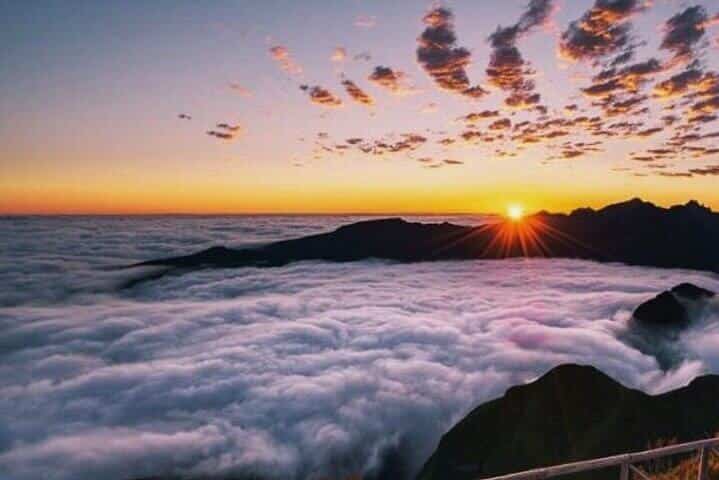
Spot 2: Bica da Cana (The Sea of Clouds) If you want to watch the sunrise from above the world, drive 35 minutes up to the Paul da Serra plateau.
-
The Visual: At 1,560 meters (5,100 feet) above sea level, the Bica da Cana viewpoint looks directly east over the central peaks of Pico Ruivo. Because of the northern microclimate, you are frequently standing above a thick cloud inversion. Watching the glowing sun break over the jagged mountain peaks and illuminate a blanket of fluffy white clouds beneath your feet is a deeply emotional, bucket-list experience.
-
The Fanal Connection: Once the sun is up, you are only a 10-minute drive away from the fanal forest, allowing you to catch the mystical morning fog rolling through the ancient trees before any other tourists arrive.
Check here the top spots to watch the sunrise in the North.
The Fiery Western Sunsets
While the mornings belong to the east, the evenings belong to the wild western edge of the Porto Moniz municipality.
Spot 1: Ponta da Ladeira Tucked quietly on the extreme northwestern edge of the island, this wild, unmanicured viewpoint is considered by local photographers to be the absolute best place to watch the sunset in all of Madeira.
-
The Visual: You are standing hundreds of meters above the sea, and on a cliff´s edge.. To your right, the island’s massive green cliffs stretch out into the distance, overlapping one another like the spine of a sleeping dragon. The sun sets exactly on the horizon, casting an ethereal, fiery glow over the rugged coastline.
Spot 2: The Ponta do Pargo Lighthouse Drive slightly further south to the absolute westernmost tip of the island.
-
The Visual: The historic lighthouse sits perched on a terrifyingly high 300-meter cliff. With absolutely zero landmass to block your view, you have a completely 180-degree panorama of the endless ocean. It is the perfect, peaceful capstone to an afternoon spent riding the nearby achadas da cruz cable car.
🤫 The Jolie Local Secret: The Commuter’s Penalty To catch a 7:00 AM sunrise at Bica da Cana from a hotel in Funchal, you must wake up at 5:00 AM, navigate the highway, and drive up winding dark mountain passes in the pitch black. To stay for an 8:30 PM sunset at Ponta da Ladeira, you must drive back to Funchal in the dark, usually missing dinner entirely.
The day-tripper is forced to choose: exhaust yourself chasing the light, or settle for the harsh, flat light of midday.
When you base yourself in Porto Moniz, you do not have to choose. You can effortlessly wake up 20 minutes before dawn, catch the sunrise on the coast, take a nap in your comfortable bed after lunch, and still easily drive 15 minutes down the road to catch an epic western sunset. You become the master of your own time.
Chapter 11: The Gastronomy of the Wild North
There is a universal truth in travel: food simply tastes better when you have the time to truly savor it.
If you are visiting the North Coast on a rushed day trip from Funchal, your culinary experience is often reduced to a stressful, frantic affair. You grab a quick sandwich, constantly check your watch to ensure you have enough daylight for the drive back, and miss out entirely on the deep, soulful food culture of the region.
But when you embrace the slow travel philosophy and base yourself in Porto Moniz, dining becomes an event. You have the luxury of sitting at a cliffside table for three hours, listening to the Atlantic waves, and tasting the profound connection between the Madeiran people and their rugged landscape. Here is your ultimate guide to the gastronomy of the wild north.
From the Sea to the Plate
Because Porto Moniz was historically isolated from the rest of the island by impassable mountains, the locals turned to the violent northern ocean for survival. Today, that legacy translates into some of the freshest, most vibrant seafood in the island.
-
The Sizzling Starter: Lapas (Limpets) You cannot visit Porto Moniz without ordering Lapas. These small, conical shellfish are harvested directly from the coastal volcanic rocks. They are served to your table still sizzling in a heavy, cast-iron skillet, swimming in an irresistible pool of melted butter, massive chunks of garlic, and fresh parsley. Grab a lemon wedge, squeeze it over the smoking skillet, and eat them immediately.
-
The Perfect Pairing: Bolo do Caco To soak up that glorious garlic butter, you need Madeira’s legendary bread: Bolo do Caco. This circular, flat bread is made with sweet potato and flour, historically baked on a hot basalt stone (caco). It is served warm, sliced open, and slathered with even more garlic butter. It is dense, soft, and dangerously addictive.
-
The Ugly Delicious: Espada (Black Scabbardfish) Do not look up a picture of this fish before you eat it. The Black Scabbardfish is a deep-sea predator with terrifying teeth, hauled up from thousands of meters below the surface by local fishermen. However, beneath its fearsome exterior is a brilliantly white, tender, and delicate meat. In Madeira, it is traditionally pan-fried in a light batter and served alongside a hot, caramelized banana and passionfruit sauce. The combination of the savory, salty fish and the sweet, tropical fruit is a culinary masterpiece.
From the Mountain to the Fire
If you have spent your morning burning calories in the high-altitude forests, you will crave something heartier than fish. Madeira’s mountain cuisine is robust, savory, and heavily reliant on open flames.
-
The Meat Skewer: Espetada Madeirense This is not your average kebab. Espetada consists of large, tender chunks of beef rubbed generously with crushed garlic, sea salt, and local bay leaves. Traditionally, the meat is skewered on a long, straight branch cut from the laurel trees in the forest, which imparts a subtle, smoky, herbal flavor into the beef as it roasts over open hot coals.
-
The Presentation: When it is ready, the waiter will bring the massive skewer to your table and hang it vertically from a special iron stand. As you eat, the savory, garlicky juices drip down onto your side plates of thick-cut french fries and Milho Frito (crispy, fried cubes of cornmeal infused with finely chopped collard greens). It is a spectacular, primal feast.
The Liquid Gold: Northern Viticulture
The northern coast produces some of the most complex, highly acidic, and critically acclaimed grapes on the island, specifically the Sercial and Verdelho varietals.
When you look at the towering cliffs of neighboring Ribeira da Janela or Seixal, you will see tiny, impossibly steep green terraces (poios) clinging to the rock. The viticulture here is “heroic.” There are no machines. The grapes are planted, pruned, and harvested entirely by hand by local farmers who navigate the dizzying vertical drops. When you order a glass of crisp, dry northern white wine or a complex, aged fortified Madeira wine to end your meal, you are tasting the literal stone and sweat of the North Coast.
🤫 The Jolie Local Secret: The Private Oceanfront Kitchen Dining out in Porto Moniz is incredible, but staying at The Jolie unlocks a completely different tier of culinary luxury. Because our local homes feature beautifully designed, fully equipped modern kitchens, you are not forced to eat at restaurants for every single meal.
Take a five-minute walk to the local village groceries in the morning. Buy fresh, crusty bread, cheese, island-grown avocados, and a bottle of wine. Bring it back to your apartment, open the balcony doors to let the ocean breeze in, and cook an intimate meal with your family or partner. Enjoying a home-cooked dinner on your private balcony while hearing the sound of the Atlantic is a deeply authentic experience that a hotel room simply cannot offer.
Chapter 12: Family Travel & Indoor Backups
When parents look at photos of Madeira’s North Coast—the jagged sea cliffs, the steep mountain passes, and the roaring ocean—they often ask a very valid question: Is this wild landscape actually safe and enjoyable for young children?
The answerwhen tou Visit Porto Moniz is a resounding yes, but only if you strategize your basecamp correctly. Attempting to drag young children on a two-hour, winding highway commute from Funchal just to see a single waterfall is a recipe for a monumental family meltdown.
By basing your family in Porto Moniz, the logistics of traveling with kids completely transform. You eliminate the exhausting transit times, allowing your children to experience the island’s magic in short, manageable, and deeply joyful bursts. Furthermore, you have the ultimate safety net: immediate access to indoor backups when the microclimate acts up.
The Ultimate Kid-Friendly Water Play
The North Coast features two of the most spectacular, family-friendly swimming environments in Madeira, both located just minutes from your front door.
-
The Paid Porto Moniz Natural Pools: While the “free” eastern pools are rugged and thrilling for adults, the paid western pools are a parent’s dream. The municipality has brilliantly modified the volcanic basin, creating expansive, shallow wading areas with smooth, concrete bottoms. Your toddlers can safely splash in the calm, sun-warmed saltwater while active lifeguards keep watch, completely protected from the violent ocean waves crashing dramatically against the outer basalt walls. With clean changing rooms, bathrooms, and a snack bar on-site, you can comfortably spend an entire morning here. Is it safe? Find out here.
-
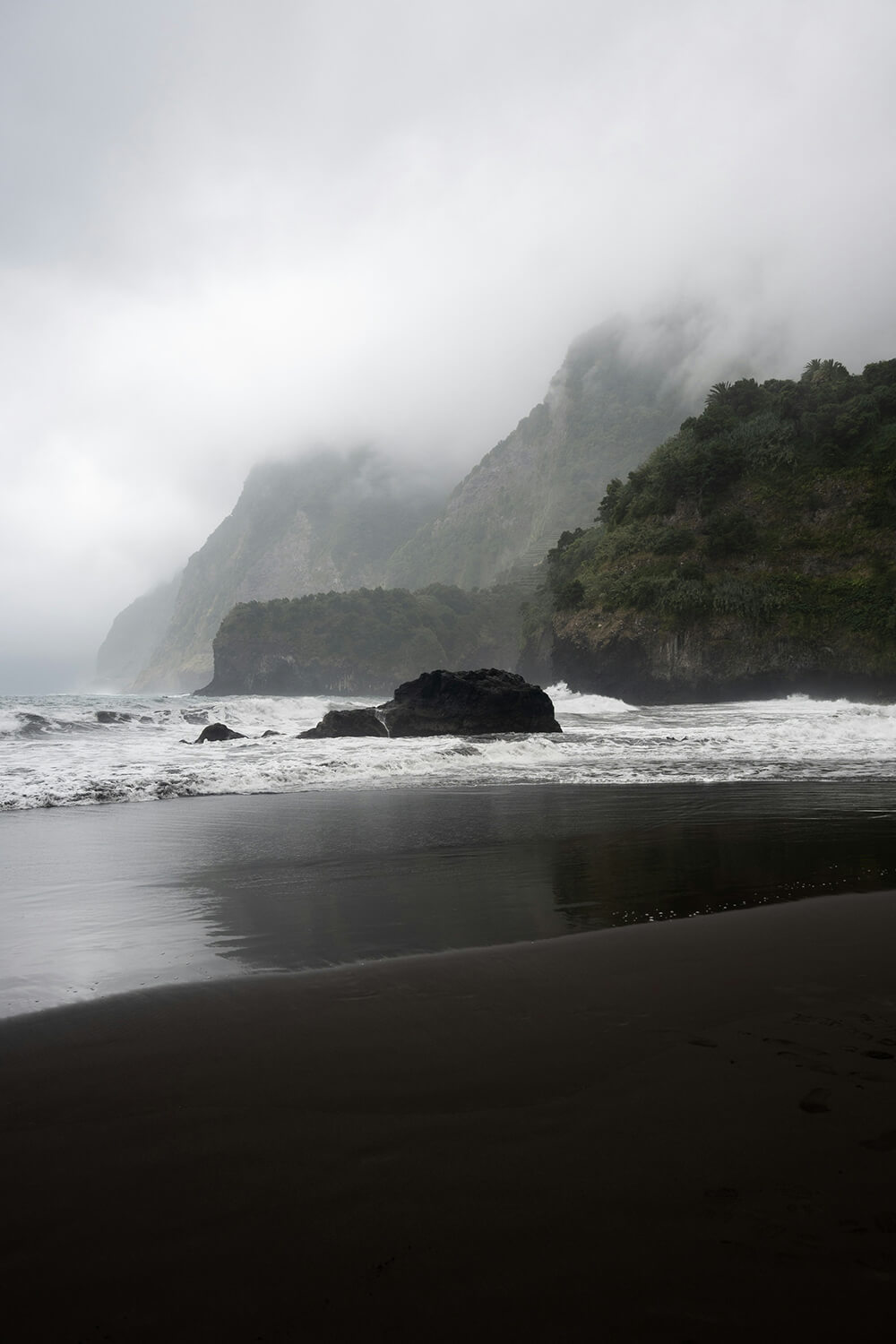
The Soft Sands of Seixal: If your kids prefer building sandcastles to exploring rock pools, take the breezy 10-minute drive to seixal beach. The fine, powdery black volcanic sand is incredibly soft on tiny feet. Because it sits in a protected cove, the water is generally calm and features a gentle, sandy bottom, making it a spectacular and visually stunning place for families to play in the shallow surf.
Indoor Backups: When the Microclimate Shifts
Because Madeira’s weather is deeply unpredictable, you might wake up to a sudden coastal downpour. If you are staying in Funchal, this ruins your entire day trip. If you are staying in Porto Moniz, you simply deploy your local, indoor backups.
-
The Madeira Aquarium (Aquário da Madeira): Housed inside the thick stone walls of the 18th-century Forte de São João Batista, this boutique aquarium is the perfect rainy-day sanctuary. It features 12 beautifully curated exhibition tanks showcasing the native marine life of the archipelago. Kids will be mesmerized by the graceful eagle rays, the lurking moray eels, and the sleek coastal sharks—all just a three-minute walk from your Jolie apartment.
-
Centro de Ciência Viva (Living Science Center): Located right in the village, this interactive, highly engaging science center is designed specifically for children and curious adults. It features hands-on exhibits explaining the volcanic geology of the island, the unique flora of the Laurissilva forest, and the deep-sea ecosystems of the Atlantic. It is an educational, fun hour that perfectly bridges the gap until the sun comes back out.
High-Yield, Low-Effort Family Adventures
You do not need to drag your children on a grueling 15-kilometer hike to show them the beauty of Madeira. The North Coast is packed with massive rewards for very little physical effort.
-
The Magic Forest: Drive 25 minutes up to the fanal plateau. You do not need hiking boots; you simply step out of the car and walk onto the flat, grassy plateau. For a child, walking through the thick, atmospheric mist and playing hide-and-seek among the massive, 500-year-old twisted trees feels like stepping straight into a real-life fairytale. And when the friendly, free-roaming cows suddenly emerge from the fog, the kids will be utterly captivated.
-
The Thrill Ride: If your children are slightly older and crave adventure, the achadas da cruz cable car is guaranteed to be the highlight of their trip. The terrifyingly steep, rapid descent down the 450-meter cliff face is an adrenaline rush they will talk about for years. Best of all, reaching the cable car only requires a 15-minute drive from your basecamp.
🤫 The Jolie Local Secret: The Power of the Midday Nap The greatest advantage of slow travel for families is the ability to retreat. Children get tired, overstimulated, and cranky.
If you are a day-tripper from the south, a tired toddler means you either force them to suffer through another tourist attraction, or you surrender and endure a miserable, screaming two-hour drive back to your hotel.
When you stay at The Jolie, you are never more than a few minutes away from home. You can spend a beautiful morning swimming at the pools, walk back to your apartment at noon, and let the kids take a long, peaceful nap in a quiet, dark bedroom. While they sleep, you and your partner can sit on the balcony with a coffee and listen to the ocean. Once everyone is refreshed, you simply walk back outside for an afternoon gelato on the promenade.
That is not just a vacation; that is a perfectly engineered, stress-free family escape.
Chapter 13: Logistics, Driving, and Parking Secrets
For many travelers, the biggest source of anxiety when planning a trip to Madeira is the driving. You have likely read the horror stories online: roads that climb vertically into the clouds, terrifyingly narrow cliffside passes, and dark, endless mountain tunnels. Are the roads to Porto Moniz safe? Full article here.
While Madeira’s topography is certainly extreme, navigating the North Coast does not have to be a stressful ordeal. In fact, when you understand the modern infrastructure and base yourself strategically, driving here becomes one of the most breathtaking road trips of your life.
The Reality of Northern Roads (VE2 vs. ER101)
The isolation of Porto Moniz officially ended with the construction of the VE2 coastal highway around 2004 and 2006. This modern marvel of engineering consists of wide, smooth, beautifully paved two-lane roads that punch directly through the mountains via well-lit tunnels.
-
The Easy Route (VE2/VE4): If you are driving from the airport or Funchal, you will take the fast VR1, cut straight through the center of the island using the VE4 tunnels to São Vicente, and then cruise along the flat, gorgeous VE2 right into Porto Moniz. It is incredibly safe and entirely stress-free.
Parking: The Porto Moniz Advantage
If you stay in Funchal, parking is a daily nightmare. You are constantly fighting for tight underground spots or circling one-way streets looking for meters.
In Porto Moniz, parking is delightfully simple and incredibly cheap.
-
The Village Infrastructure: There´s several parking zones in the center of the village. You can usually park your car safely for the entire day for around €5.00.
-
Trailhead Secrets: The secret to parking at the major natural attractions is entirely based on your proximity. Because day-trippers from the south take over an hour to arrive, the parking lots at seixal beach, the Fanal forestry station, and the Rabaçal levadas are completely empty before 9:30 AM. When you wake up at The Jolie, you are only 10 to 25 minutes away. You casually drive up, claim the best VIP parking spots, and enjoy the nature before the chaos begins.
🤫 The Jolie Local Secret: The Old Road Waterfalls Between São Vicente and Seixal, you will notice sections of the old ER101 road that have been closed to cars due to rockfalls. However, you can still safely walk onto some of these closed sections. Park your car at the designated viewpoints along the modern VE2,before the Agua d´alto waterfall and walk a few hundred meters onto the old, crumbling asphalt. You will have a glimpse of the old roads conditions , and see some massive waterfalls pouring directly onto the old road, completely hidden from the new highway!
Chapter 14: The Seasonal Guide to Porto Moniz
Because of the island’s famous microclimates, Madeira is genuinely a year-round destination. However, the untamed North Coast shifts its personality dramatically depending on the season. Deciding when to visit depends entirely on what kind of magic you are looking for.
Spring & Summer (The Golden Months: May – September)
This is the classic, sun-drenched Madeiran vacation. The ocean temperatures warm up beautifully, making it the perfect season for endless coastal lounging.
-
The Swimming Season: The Atlantic is calm, and the porto moniz natural pools become a warm, crystal-clear aquatic playground. You can spend your entire afternoon floating on your back, watching the clouds drift over the green mountains.
-
The Festivals: July brings the Semana do Mar (Sea Week) to Porto Moniz. This is the biggest cultural event of the year, featuring live music, incredible local food stalls, and canoe races. The village comes alive with a joyous, authentic local energy. Read more here.
-
The Strategy: Summer is the busiest season for the island. Staying in Porto Moniz during these months is critical because it allows you to utilize the “Early Bird” strategy to beat the massive Funchal summer crowds to every attraction.
Autumn & Winter (The Dramatic Swells: October – April)
If you want to experience the raw, cinematic power of nature, winter in the north is an absolute revelation.
-
The Roaring Ocean: The calm summer waters are replaced by massive, thundering winter swells. Watching 15-foot waves violently crash against the basalt sea stacks and erupt into 50-foot geysers of white foam is a mesmerizing, humbling experience. (Note: The natural pools frequently close during high winter surf for safety, but the visual spectacle is worth the trip alone).
-
The Pluvial Waterfalls: Winter brings the rain to the high mountains, which means the island’s most spectacular pluvial waterfalls come roaring back to life. This is the only time of year to truly appreciate the hidden 140-meter drop at the Garganta Funda viewpoint.
-
The Fanal Phenomenon: Winter is the absolute best time to visit the fanal plateau. The dense, atmospheric fog rolls in thick and heavy, and the heavy rains fill the central depression to create the legendary, mirror-like “Lagoa do Fanal” (Fanal Lagoon).
Chapter 15: The Jolie Slow Travel Blueprint & Conclusion
You have read the history. You understand the microclimate. You know exactly where the hidden beaches, the ancient forests, and the towering cliffs are.
The final step is to put it all together into a masterpiece of an itinerary. When you bypass the exhausting southern commutes and make The Jolie your home base, your vacation transforms from a stressful checklist into a rhythm of deep, restorative exploration.
The 3-Day Slow Travel Masterplan
Day 1: The Rhythm of the Water
-
Morning: Wake up with the sun and take a 3-minute walk to the free porto moniz natural pools. Enjoy a silent, private sunrise swim before the day-trippers arrive.
-
Lunch: Walk the promenade and indulge in sizzling Lapas (limpets) and garlic Bolo do Caco at an oceanfront tavern.
-
Afternoon: Take the breezy 10-minute drive east to seixal beach. Claim your spot on the soft black sand, swim in the turquoise cove, and admire the Jurassic-green cliffs.
-
Evening: Cook an intimate dinner with fresh local produce in your fully equipped Jolie kitchen, dining on your private balcony while listening to the Atlantic waves.
Day 2: The High Altitude Mystique
-
Morning: Drive 25 minutes up the ER209 directly into the clouds. Spend your morning wandering through the moody, silent mist of the fanal forest, photographing the 500-year-old twisted trees.
-
Lunch: Enjoy a packed rustic picnic on the Paul da Serra plateau.
-
Afternoon: Take an easy, flat walk along the Levada dos Cedros or the Levada do Monho trail to immerse yourself in the ancient Laurissilva ecosystem.
-
Evening: Drive back down to the coast, wash the mountain mud away with a hot shower, and feast on a massive, smoky Espetada (garlic beef skewer) at a traditional northern restaurant.
Day 3: The Edge of the Earth
-
Morning: Sleep in. Enjoy a slow, lazy morning coffee on your balcony.
-
Late Morning: Drive 15 minutes west to the achadas da cruz cable car. Plunge down the 450-meter cliff face and explore the abandoned, car-free coastal fajã.
-
Afternoon: Drive slightly further south to witness the hidden 140-meter Garganta Funda waterfall and the ponta do pargo lighthouse
-
Sunset: End your final day at the wild Ponta da Ladeira viewpoint. Watch the sun sink directly into the ocean behind the jagged western cliffs, knowing your warm bed is only a short drive away.
The Direct Booking Advantage: Reclaim Your Vacation
When you book directly with The Jolie, you bypass the massive corporate commissions. That means we can invest every single euro back into providing you with premium, beautifully designed, fully equipped local homes. It means we can provide you with dedicated, insider local knowledge—like this exact 15-chapter guide—that guarantees you experience the true, untamed soul of Madeira.
Do not spend your precious vacation days trapped in a rental car, staring at the taillights of a tour bus on a crowded southern highway. Do not settle for a rushed, exhausting day trip to paradise.
Stop commuting. Start belonging.
Trade the crowded resorts for raw, untamed nature. Trade the stress of the clock for the luxury of slow travel. Wake up where the ocean meets the mountains, and discover Madeira Island exactly as it was meant to be seen.
Give yourself the ultimate luxury of time.Visit Porto Moniz. Explore our premium collection of local homes and book your unforgettable North Coast retreat directly at The Jolie today.
Share this content with your friends >>
Related articles you might like: